 English
 Arabic
 French
 Spanish
 Portuguese
 Deutsch
 Turkish
 Dutch
Dutch
 Italiano
 Russian
 Romaian
 Portuguese (Brazil)
 Greek
Greek
Why the Grain Trailer Market Is Accelerating Worldwide
Other |
2026-04-23 12:38:50
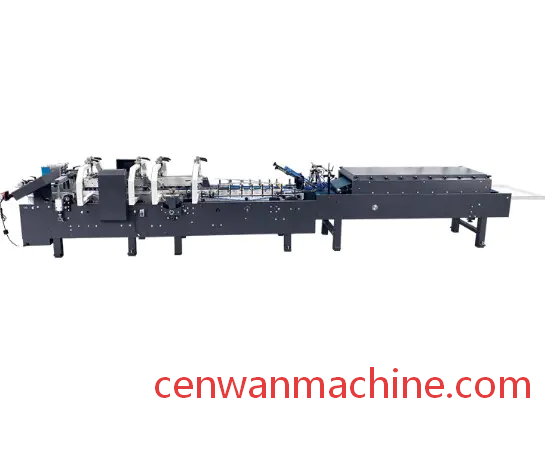
Packaging manufacturers frequently receive orders requiring two distinct bottom closure styles: lock-bottom and crash-lock. Lock-bottom boxes use interlocking panels that form a self-locking base. Crash-lock bottoms fold flat and snap open automatically during filling. A single Carton Folder Gluer Machine equipped with modular tooling can handle both types without physical reconfiguration of the main frame. Do you know how cenwanmachine designs its systems to produce these different bottom structures on the same equipment?
The folding section of a Carton Folder Gluer Machine determines which bottom style emerges from the delivery end. Lock-bottom boxes require pre-breaking stations that score the blank along specific lines. These pre-breaking units create hinge points that allow panels to rotate ninety degrees. Crash-lock boxes need cam-operated plungers that push the folded bottom panels outward before the glue application stage. A quick-release mounting system for these plungers allows operators to remove or install them within minutes. Two sets of folding belts running at different speeds produce the distinct folding sequences required by each bottom type.
Glue application patterns differ fundamentally between lock-bottom and crash-lock constructions. Lock-bottom boxes need glue on the manufacturer's joint only. Crash-lock boxes require adhesive spots on the bottom flap corners to prevent unintended unfolding during filling. A Carton Folder Gluer Machine with dual-application stations applies glue where needed for each style. The first station handles the side seam. The second station engages only for crash-lock production. Electronic sensors detect the box blank style as it enters the machine. These sensors signal the second glue valve to activate or remain closed. This selective gluing prevents adhesive waste and keeps machine parts clean.
Changeover procedures between bottom styles take less than fifteen minutes with proper design. Color-coded adjustment handles identify settings for each box type. Digital readouts store position data for up to twenty different job configurations. Operators recall a saved recipe, and servo motors move folding rails, glue nozzles, and pressing wheels to recorded positions. This memory function eliminates manual measuring and trial runs. A Carton Folder Gluer Machine equipped with this automation produces first acceptable boxes immediately after the changeover. No warm-up waste or adjustment rejects occur.
Material handling differs for each bottom style during the feeding phase. Lock-bottom blanks arrive at the machine with pre-formed creases. A vacuum-assisted feeder separates these blanks without tearing. Crash-lock blanks require gentle separation because the bottom panels are not yet folded. An air-blast system floats the top blank from the stack, preventing double-sheet feeding. Both feeding methods use the same physical hopper. A sliding side guide adjusts width in seconds. The feeder type selection happens through the control panel, selecting vacuum strength or air pressure accordingly.
https://www.cenwanmachine.com/product/folder-gluer-for-cardboard-box/ includes detailed specifications for dual-bottom production capability. The product catalog lists available pre-breaking stations, cam plunger kits, and dual-glue systems. Buyers can request video demonstrations showing both bottom styles running on the same machine. Factory engineering support assists with selecting the correct tooling package for specific box dimensions. Installation training covers changeover procedures and recipe storage. Annual maintenance checks verify folding belt alignment and glue valve response times. Why limit production flexibility when a single machine handles both bottom requirements?
